A legend is reemerging from the ripples of the Grand, from the depths of the city’s public library, from the rustling leaves of the trees stretching toward the water.
A strange creature the river knows well even after it’s fallen from the memory of Grand River dwellers. Out goes the lowhead dams which buoyed namesake rapids for a century. In comes native plantings cascading toward the water to replace stark, grey floodwalls. Loud is the laughter and warm is the joy revitalized as we, an ecosystem of humans, plants, fish, come back to a healthy river. And a troll, found where the trillium grows, is returning.
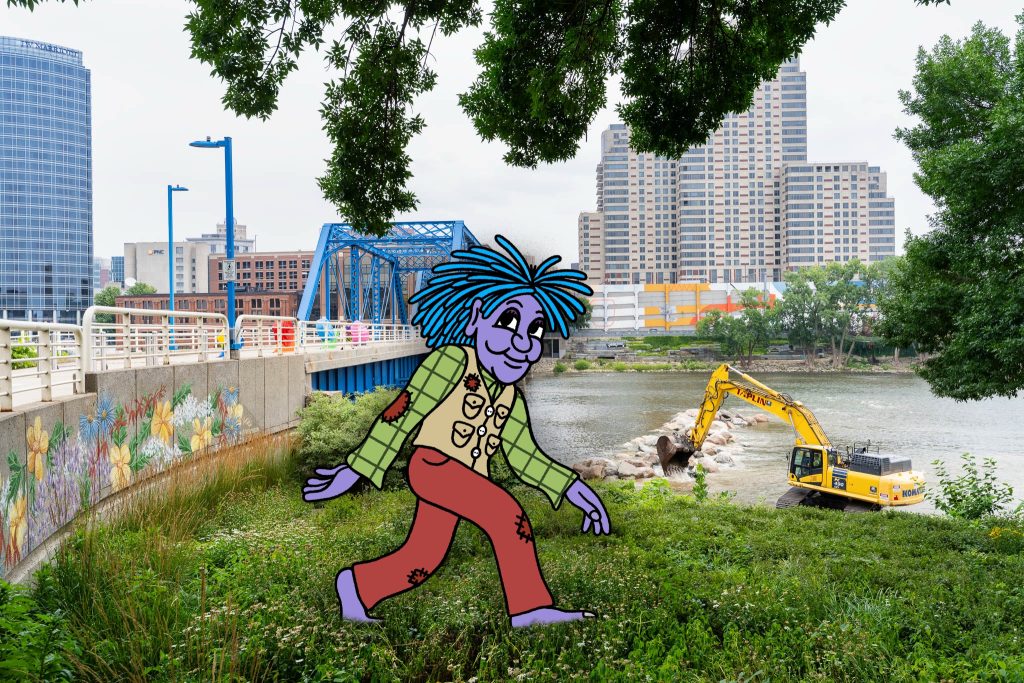
Their name is Revirdnargehtevoli – “Revi,” for short.
This is the story Revi, of the Grand River Troll:
“Once, so long ago that there are no printed page to tell the story and no one enough to remember, a gentle river and flowed through a green valley.
There were many fish in the waters of the river, and many wild animals came to its edges to drink.
Little by little, people came to the green valley. They lived along the banks of the river. They fished in its waters, they traveled its length in boats of bark.
And there was a strange creature that lived there, no one quite knew where. They were neither human nor animal and seemed to be both.
They made friends with the fish and animals and people. The troll loved the river and the woods and hills. Sometimes they spent days wandering in the meadows and along the hilltops, but the river was their home and the troll never strayed far nor stayed long.
The gardens they helped to plant always produced fine healthy vegetables and fruit in great abundance. The babies were happier when the troll visited, the fishing and hunting easier. On a cold winter’s day, when they joined a family’s dwelling, the fire seemed to be warmer and to burn brighter.
More people settled into the valley over time. Those people liked the river too, and they called it the ‘Grand River.’ They cut down the trees along the river banks and used the trees to build their houses.
When the new people saw the creature, they needed an explanation for this strange individual. They had heard stories from other lands about people called ‘trolls.’ They didn’t like the troll much. The troll was ugly. The troll hid from them and appeared unexpectedly and disappeared without a trace. The people could never find the troll’s dwelling place.
Still more people came to the valley. They tore up the meadows and hilltops, and made streets leading to their houses. They built churches and stores and banks. They put mills along the river and used its waters to make electricity to run their machines.
The troll still came around sometimes. They met children who appreciated them. They taught them new games and sang silly songs together. They showed them good fishing spots and when they were with the children, deer and raccoons and birds came up to them and they could talk together. The troll knew where the trillium grew, and the wild raspberries.
The children asked the troll what they should call them. ‘You must have a name,’ they told the troll.
‘Alright, call me Revirdnargehtevoli,’ (reverd-nar-ga-the-va-lee) the troll said.
The town grew larger. Tracks were laid and great trains came chugging into the valley. Steamboats whistled up and down the Grand River and more factories were built along the its banks. The water grew muddy and many fish died.
Revi grew very sad. They came more frequently to the town and tried to talk to the people. They tried to tell the townspeople that they were killing the river.
‘There are no quiet spots for fishing,’ Revi said, ‘no peaceful, grassy spots just to sit and watch the sparkling, clear water flow by.’
No one would listen to the troll. The people had no time for an ugly creature who had no house nor job and was not one of them.
So the troll tried other ways to make the people see what harm they were doing. Sometimes gardens didn’t grow and sometimes trains had wrecks. Boats capsized and building burned, horses and cows died. The people called it bad luck and knew the luck would change.
‘I love the Grand River, but there is no place for me here,’ the troll said. ‘The river is dying and no one cares.’
So the troll disappeared. Before they did, they left their creed with the people:
Of my species I am last,
A living link to ages past.
When pure river water flowed undebased,
Unsullied by industrial waste
As the waters grew darker, more dirty, more drear
The trolls had no choice but to disappear.
But now of the Grand we’re no longer ashamed,
So my riverside home at long last I’ve reclaimed.
Only vigilance and resolution
Will keep the Grand free of pollution.
All citizens must take a stand
To keep the river truly Grand.
Now that pollution by our city is spurned,
The Grand River troll will indeed return.
While the waters run clear, in the city I’ll stay.
Allow river pollution and I’ll again go away.
On the river banks once quite bucolic
Troops of trolls would daily frolic
Until contaminants vitriolic
Wrought their changes diabolic
Mere mention turns me melancholic
Of clean water I’m symbolic.
If you think the river should be kept clean,
Say ‘Revirdnargehtevoli’;
Both banks lush with parks and green,
Say ‘Revirdnargehtevoli’;
And each time you come across the troll,
Say ‘Revirdnargehtevoli.’
The children who had known the troll grew up and they told their children about Revirdnargehtevoli. ‘They loved the river,’ the children would say. ‘They’ll be back some day. They could never stay away forever. Maybe someday the water will be clean again, maybe someday people will care. And then we’ll see Revirdnargehtevoli.’
Sometimes on a soft summer evening, standing at the water’s edge, there can be heard in the river’s flow ‘revirdnargehtevoli, revirdnargehtevoli, revirdnargehtevoli.’”
The river is remembering again. Revi is returning!
The concept of the Grand River Troll was borne from Urban Concern Inc., a Grand Rapids-based civic action group from the 1970s that advocated for river stewardship and activation. Urban Concern Inc. dispersed before the turn of the century but their inspired many present-day initiatives. For more on Urban Concern, visit the Grand Rapids Public Library Archival Collection.