Now, Taplin is winding down their first season of restoration. The Grand River looks and sounds different already – the rapids are indeed returning. So, what all did they complete in the first half of Lower Reach Restoration?
Wildlife relocated
If you’ve worried about the survival of native aquatics in the Grand River during construction, you’re not alone. In 2024, and again before the 2026 start, partners diligently scheduled construction seasons around fish spawning and enlisted professional divers to safely relocate endangered freshwater mussel species. This year, divers relocated about 80 mussels and 1,600 fish. Once the restoration project is complete, native species to the Grand River watershed will have more safe and ecologically diverse habitat, including the relocated species who are anticipated to return.
Dam 2 removed
By early August, the west half of Dam 2 was removed (dams are numbered one through four from Pearl Street moving upstream). An historic survey of the dam was also conducted to document the historic role and contents of the low-heads dams in the Grand River. As of late October, 2026, Dam 2 has been removed; now, boulder drop structures and habitat boulders are visible within the channel and the sound of the rapids has returned.
Bonus: Excavating an historic pipe! During the removal of Dam 2, crews excavated an historic hand-rolled steel pipe speculated to be at least from the 1920s. Remains of the pipe have gone to the Grand Rapids Public Museum.
Restorative features installed
Coffer dams, turbidity curtains and causeways
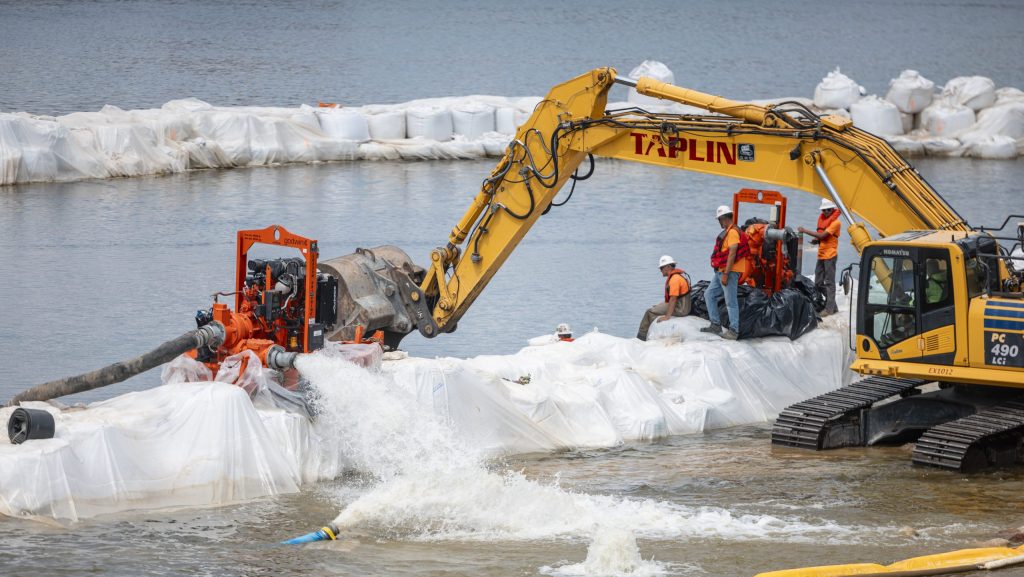
This logistical trio consists of three critical installations of in-channel work that keep construction moving smoothly. Taplin crews constructed causeways, or “roads,” across the river on which trucks could safely navigate the river bed. Turbidity curtains were installed downstream to catch sediment stirred by construction and minimize disruption to the river’s habitat. Coffer dams were used to isolate and dewater the west side of Dam 2 to create space for machinery, safe excavation and precise boulder drops.
Boulder drop structures
Boulder drop structures were installed between Dams 1 and 2 and have created notable visual and auditory changes in the Grand River already. These structures span across the width of the river, offer additional habitat and fish passage – like a natural fish ladder – at higher velocity.
Habitat boulders
Natural habitat boulders have also been placed across the Lower Reach. These large boulders provide restored habitat for the Grand River’s native species and are equally visible south of the Blue Bridge and between Dams 1 and 2. All boulders as part of the Lower Reach project are intentionally sourced from Michigan’s Upper and Lower Peninsulas.
J-hooks
All three j-hook boulder structures were installed between Pearl Street and Fulton Street. J-hooks are arched boulder structures that slow down stream velocity to create eddies for better and safer access. The first of these weirs were installed in late summer near the new Grand Rapids Public Museum riverfront. In fact, this restored section of the river already has a few frequent flyers, including a blue heron locally referred to as Bennett.
Removing Dam 1 & into 2027
The removal of Dam 1, initially anticipated to begin in the second year of construction, started ahead of schedule in September, 2026. A portion of the west end of the dam has been excavated and will pick back up next season.
Overall progress on this restoration project has been swift, smooth and ahead of schedule. The voice of the rapids is now amplified after generations of quieting. We’ll see you on the river soon!